AZ / Market desk
Loading workspace
Assembling the latest view.
Checking the requested surface and preparing its current state.
AZ / Market desk
Loading workspace
Assembling the latest view.
Checking the requested surface and preparing its current state.
For Arizona Cash Buyers and Flippers
If you buy off-market deals in Arizona, you've already run into this: the same property marketed through multiple wholesalers at different price points, none of whom are the original contract holder. Here's how to detect it fast.
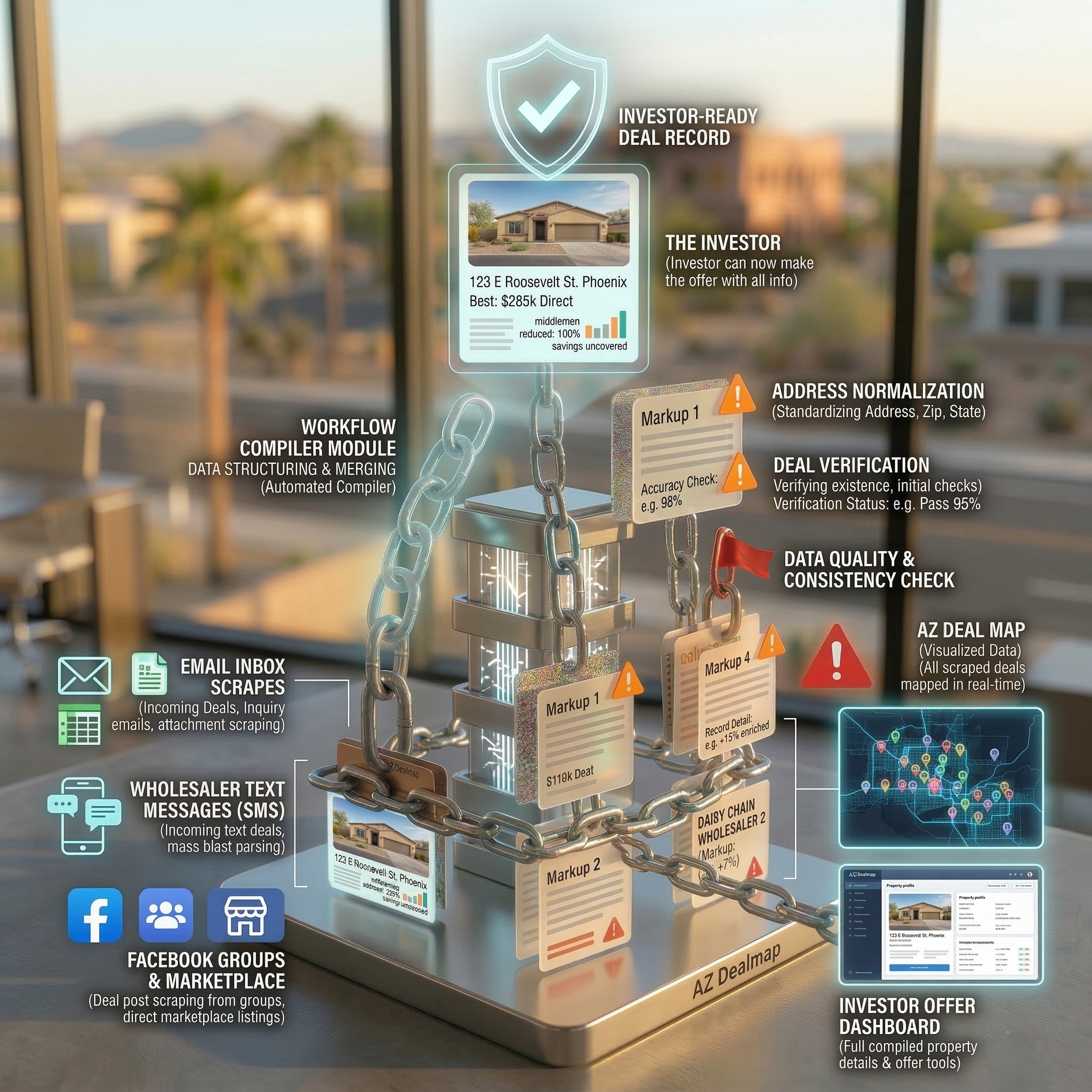
A daisy chain happens when a wholesaler who does not control the deal — meaning they have no direct contract with the seller — re-markets the property at a higher price to their own buyer list.
The sequence typically looks like this:
By the time you call, you're $45,000 removed from the original ask — and you don't know it.
You run comps, pull assessor records, and review scope on a deal that's already over-priced by multiple middlemen.
You call the third-layer wholesaler who can't negotiate — they're just reselling someone else's paper.
The deal might have worked at the original assignment price. By the time it reaches you through the chain, the margin is gone.
Multiple parties expect to be paid at close. The longer the chain, the messier the assignment fee stack.
If you subscribe to multiple wholesaler lists, compare what each one is asking for the same property. Price drift of $5,000–$20,000+ across sources is a clear chain indicator. The lowest marketed ask is closest to the original assignment.
The first blast you received for a given address is typically the primary source. Blasts arriving hours or days later at higher prices are often re-markets. If you've archived your wholesaler emails, you can build a timeline of when each source first promoted an address and at what price.
"Do you have the assignment contract, or are you passing this from another source?" A direct question usually gets a direct answer. Chains tend to produce vague responses.
Check current ownership, the last recorded transfer, and whether any recent deed activity has happened. If the deal is moving legitimately, you can sometimes see early indicators that a daisy-chain middleman wouldn't know about.
The same property appearing in multiple Arizona investor groups, posted by different people at different prices, is a strong daisy-chain signal. The person who posted first in the most credible group is usually the most direct connection.
Manually tracking daisy chains across inboxes, Facebook groups, and networking contacts takes real time. AZ Deal Map aggregates Arizona wholesale deal flow from multiple sources into a single map-based view. When the same property appears through more than one source, it's surfaced so you can compare asks side by side and immediately see the spread between the highest and lowest marketed price.
Keep following the investor workflow
Duplicate listing detection is the first layer. The next layer is knowing which sources are worth trusting, which buyers keep showing up in recorder data, and how to move from price comparison into better investor judgment.
Get started
AZ Deal Map is built for investors who want deal intelligence, not just deal listings. Start with the free demo, then unlock InsightsPRO for the extra investor context that helps you separate noise from real opportunity.